
When homeowners think about indoor air quality, they usually look straight at their air filters, ductwork, or air purifiers. However, one of the most common sources of contaminated breathing air is hiding completely out of sight: your drainage system.
There is a direct, scientific connection between the health of your plumbing lines and the air moving through your living spaces. When wastewater lines slow down or suffer from a severe blockage, it triggers a chain reaction that directly impacts your family’s respiratory health.
The Science of a Clog: More Than Just Standing Water
A clogged drain is significantly more than an annoying inconvenience that slows down your morning routine. It is an active, dark, and damp ecological incubator.
Every single time you rinse food particles down the kitchen sink, shave over the bathroom basin, or wash away soap scum in the shower, organic matter adheres to the inner walls of your pipes. When water stops flowing freely, this trapped organic debris accumulates alongside stagnant water.
Within less than 48 hours, this damp environment becomes a premier breeding ground for dangerous bacteria, thick biological film (biofilm), and aggressive mold spores. As water rushes over these active cultures during daily use, microscopic airborne particles travel upward, escaping right out of your sink openings and into the air you breathe.
How Toxic Sewer Gases Enter Your Living Space
Your home’s plumbing system utilizes a critical component known as a P-trap—the curved pipe underneath your sinks—to hold a small amount of water that acts as a physical barrier against toxic subterranean sewer gases. However, when a primary sewer line or branch drain is heavily clogged, the structural physics of your system fail.
A localized blockage or restricted main line creates intense pressure imbalances within your venting system. When a large volume of water tries to force its way past a stubborn restriction, it creates a vacuum effect that actively siphons the protective water straight out of your plumbing P-traps.
Once this water barrier dries out or gets pulled away, toxic sewer gases—including hydrogen sulfide and methane—push backward unimpeded up through the pipes. These gases escape directly into your household breathing air, often announcing their presence with a subtle, persistent “musty” or “rotten egg” odor, which can trigger unexplained headaches, dizziness, and fatigue for residents inside.
Airborne Contaminants: The Health Risks You Can’t See
The airborne dangers emerging from neglected drains are invisible, making them exceptionally easy to ignore until physical symptoms manifest. For households with young children, elderly individuals, or family members suffering from pre-existing respiratory conditions like asthma and chronic allergies, polluted drain air poses a significant daily threat.
Breathing in microscopic airborne mold spores and aerosolized bacteria originating from uncleaned plumbing lines can cause chronic sinus inflammation, itchy eyes, coughing fits, and severe nighttime congestion. If your household is suddenly experiencing persistent allergy symptoms that don’t seem to clear up with standard air filtration, the true root cause could be an active, organic clog festering inside your walls.
3 Simple Steps to Protect Your Home’s Air and Plumbing
Maintaining pristine indoor air quality and clear plumbing requires consistent, proactive habits. Protect your home and health by implementing these three straightforward rules:
- Never Ignore Slow Drains: A drain that takes an extra minute to empty is telling you that organic matter is accumulating. Address it before it transforms into a stagnant bacterial hazard.
- Avoid Harsh Chemical Cleaners: Over-the-counter chemical drain cleaners are highly corrosive liquids that temporarily melt debris while eating away at your metallic or PVC piping. The resulting rough pipe interiors actually catch hair and food particles faster, leading to worse biological clogs down the line.
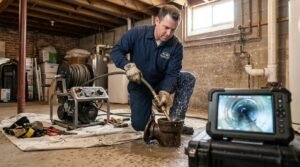
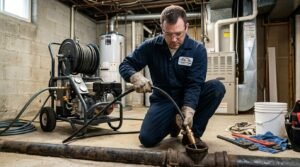
- Invest in Routine Maintenance: Scheduling an annual professional drain clearing with advanced hydro-jetting completely scours the inner walls of your pipe system. This high-pressure cleaning flushes out deep-seated biofilm, eliminating bacteria and mold growth before it has a chance to contaminate your home’s air supply.
Clean Plumbing Means Clean Air
A truly healthy home relies on a seamless balance of climate control, proper air filtration, and perfectly clear plumbing lines. By taking proactive care of your drainage system today, you keep your lines running smoothly and your family’s breathing air completely fresh, clean, and free of airborne contaminants.