
Common Signs of Clogged Sewer Lines & How Hydro Jetting Helps in Burbank, IL
Your home’s main sewer line is the central plumbing artery that collects wastewater from every toilet, sink, shower, and washing machine, transporting it safely to the municipal sewer system. In established neighborhoods across Burbank (60459), Oak Lawn, Bridgeview, and Cook County, aging main sewer laterals are particularly vulnerable to tree root intrusion, grease accumulation, and structural pipe deterioration.
Recognizing early warning signs of a clogged sewer line prevents raw sewage backups into basement drains and lower-level plumbing fixtures.
Top Warning Signs of a Clogged Main Sewer Line
Unlike a simple clogged sink or localized trap blockage, a main sewer pipe obstruction affects multiple fixtures throughout your home simultaneously. Look for these warning indicators:
1. Multiple Slow-Draining Fixtures
If water drains sluggishly across several fixtures at once—such as your bathtub, basement utility sink, and kitchen sink—the blockage is located downstream in the main lateral pipe rather than individual branch lines.
2. Gurgling Sounds from Toilets & Drains
When wastewater attempts to pass through a restricted sewer line, air becomes trapped and bubbles back up through standing trap water. You may hear distinct gurgling or bubbling sounds coming from toilets when running the washing machine or draining a full tub.
3. Sewage Backup in Floor Drains or Tubs
Floor drains located in basements or utility rooms sit at the lowest elevation in your house. When the main lateral clogs, flushed wastewater has nowhere to go and reverses direction, backing up out of basement floor drains or shower basins.
4. Unpleasant Sewer Gas Odors
A cracked sewer line or severe clog traps organic debris, causing sewer gas (hydrogen sulfide) to escape through pipe joints, cleanout access points, or dry floor drain traps into living spaces.
5. Unexplained Lush Green Patches in the Lawn
If tree roots have fractured an underground clay or cast-iron sewer line in your yard, nutrient-rich wastewater leaks into surrounding soil. This produces patches of bright green, fast-growing grass directly above the main line burial path.
What is Hydro Jetting & How Does It Clear Main Sewer Lines?
Traditional sewer cabling or snaking uses a spinning steel cable to punch a small hole through blockages to restore temporary flow. However, snakes leave heavy grease coatings, scale, and root fibers attached to inner pipe walls, causing quick re-clogging.
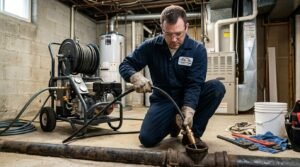
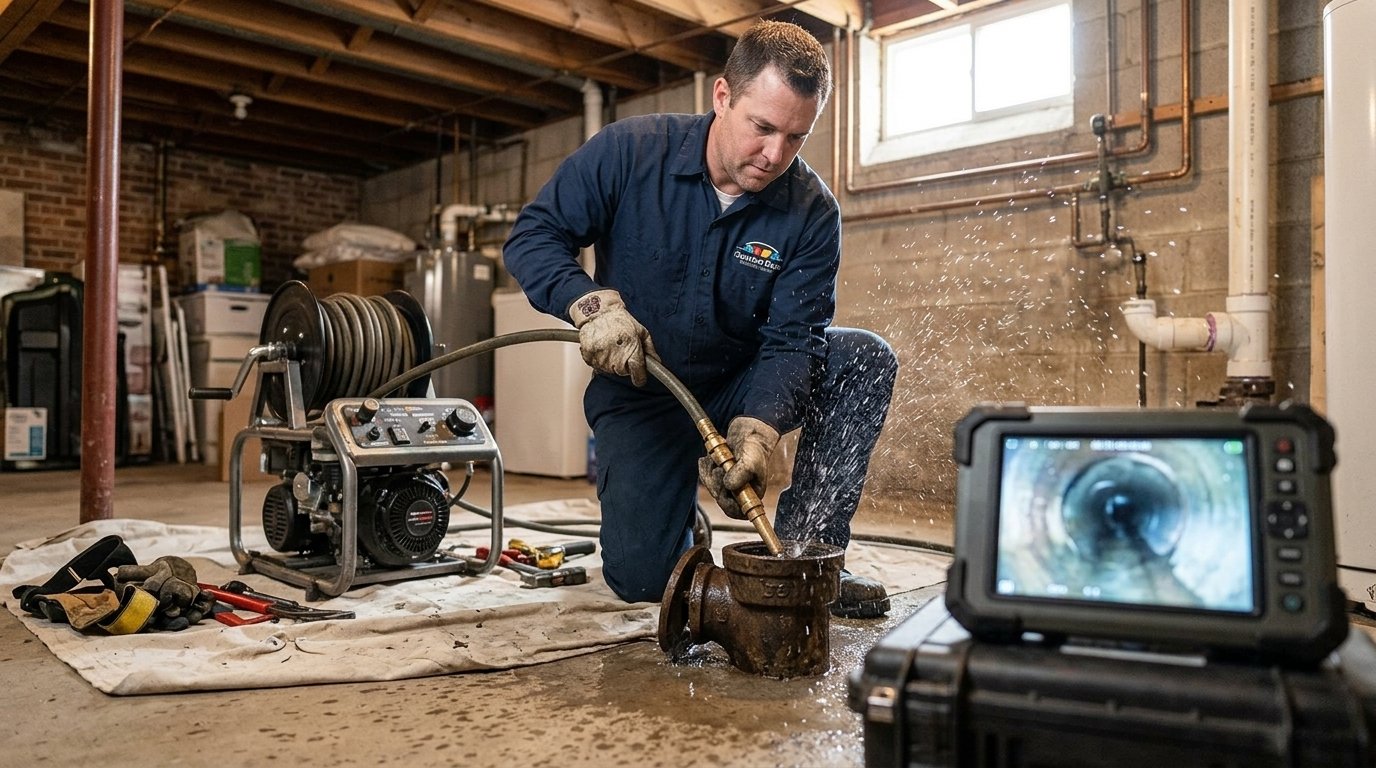
Hydro Jetting is an advanced drain cleaning method that utilizes high-pressure water streams (up to 4,000 PSI) directed through specialized rotational nozzles:
- Complete 360° Wall Cleaning: High-pressure water blasts away grease, sludge, mineral scale, and debris buildup, scouring pipe walls back to bare metal or PVC.
- Severe Tree Root Elimination: Heavy-duty forward-facing water jets shear off stubborn tree root masses penetrating pipe joints without harsh chemicals.
- Long-Lasting Results: Removing all internal buildup prevents new debris from catching, keeping main sewer lines running clear for years.
Traditional Cable Snaking vs. High-Pressure Hydro Jetting
| Feature / Metric | Traditional Cable Snaking | High-Pressure Hydro Jetting |
| Primary Mechanism | Rotating steel blade / spring cable | High-pressure water stream (up to 4,000 PSI) |
| Cleaning Scope | Punches a hole through central clog | Flushes and scours 100% of inner pipe surface |
| Grease & Sludge Removal | Limited (Leaves grease film on pipe walls) | Completely dissolves and washes away grease/sludge |
| Root Cutting Ability | Cuts central core of roots | Shears roots off flush at pipe entry joints |
| Pipe Material Compatibility | Suitable for most pipes | Safe for PVC, cast iron, and sound clay tile |
| Inspection Requirement | Standard video inspection recommended | Mandatory video camera pre-inspection required |
Explore our full range of Main Sewer Line Repair & Emergency Drain Cleaning Services.
Is hydro jetting safe for older cast iron or clay sewer pipes?
Yes, provided a sewer camera inspection is performed first. Technicians verify pipe structural integrity before hydro jetting to ensure lines are intact and free of collapse.
How often should homeowners have main sewer lines cleaned?
For homes with mature trees near sewer laterals or historical root issues, routine preventive hydro jetting or cabling every 18 to 24 months prevents unexpected backups.