
Waking up to a cold shower is one of the most frustrating experiences for homeowners in Burbank (60459), Oak Lawn, Palos Hills, or Cook County. Your residential water heater operates under constant pressure and high temperatures, making its critical components vulnerable to failure, corrosion, and wear over time.
While minor issues like a pilot light going out are easy to fix, primary component failures such as a cracked holding tank or a burnt-out surface ignitor require immediate professional plumbing attention. Ignoring a leaking water heater can quickly escalate into catastrophic flooding and water damage.
Gas Water Heater Ignitor Failure: Symptoms & Causes
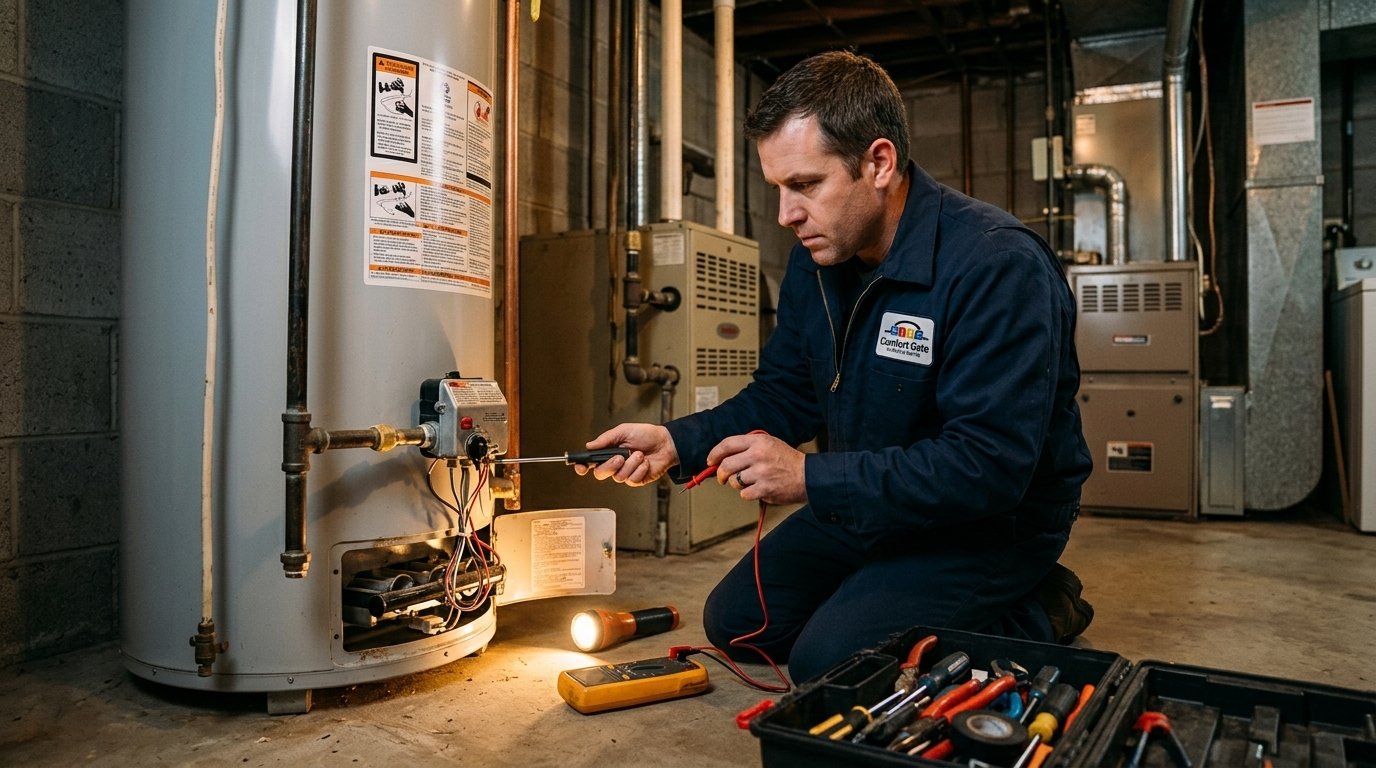
Modern gas-fired water heaters use electronic hot surface ignitors (HSI) to light the main burner assembly, replacing traditional standing pilot lights. When this component fails, your system loses its ability to produce hot water.
Symptoms of Ignitor Failure:
- Water is Completely Cold: This is the most obvious sign. The system cannot initiate the combustion process.
- You Hear the Unit Clicking, but Burners won’t Light: The system is attempting to ignite the gas, but the ignitor is not glowing hot enough.
- Error Codes on the Digital Display: Modern water heaters with electronic controls will display specific diagnostic error codes related to ignition failure.
Causes of Ignitor Burnout:
- Age and Wear: Like lightbulb filaments, hot surface ignitors have a limited lifespan and eventually burn out after thousands of heating cycles.
- Carbon Buildup: Soot and grime can build up on the ignitor surface, insulating it and preventing it from reaching the necessary ignition temperature.
- Cracked Ceramic Element: Vibration or thermal stress can cause the fragile ceramic base of the ignitor to fracture.
Leaking Water Heater: Identifying the Source & Risks
A leaking water heater requires immediate investigation. Water pooling around the base does not always mean the tank has ruptured, but it always requires diagnosis:
Leaks Around the Base (Tank Rupture Risk)
If you see water leaking from the bottom of the jacket or pooling under the unit, it usually indicates the inner steel storage tank has corroded and fractured. This requires complete water heater replacement. Continuing to run a unit with a compromised tank risks a complete blowout and severe flooding.
Leaks from the Top connections
Water pooling on top of the water heater is often caused by failed pipe nipples, loose flex connector connections, or a failing Temperature and Pressure (T&P) relief valve.
T&P Relief Valve Discharge
The T&P valve is a critical safety device designed to release water if the internal pressure or temperature exceeds safe limits. Persistent dripping or discharge usually indicates:
- Excessive household water pressure (exceeding 80 PSI).
- Water temperature set too high (over 140°F).
- A malfunctioning safety valve itself that requires replacement.
Water Heater Troubleshooting & Action Guide
| Common Symptom | Likely Cause | Recommended Action | Risk Level |
| Complete Cold Water | Ignitor Failure / Gas Valve Issue | Call for gas appliance diagnostics | ⚠️⚠️ Moderate |
| Leak Around Base | Cracked Inner Steel Tank | Replacement Required; shut water OFF | ⚠️⚠️⚠️ High (Flooding Risk) |
| Rust-Colored Water | Anode Rod Failure / Tank Corrosion | Schedule anode rod replacement immediately | ⚠️ Moderate (Accelerates corrosion) |
| T&P Valve Dripping | High Water Pressure / Temp | Schedule pressure test; check temp settings | ⚠️⚠️ Moderate |
Frequently Asked Questions
How long should a residential water heater last in Burbank, IL?
With regular annual maintenance and anode rod replacement, standard gas and electric tank water heaters typically last between 8 and 12 years.
Is it worth replacing a water heater ignitor?
Yes, if the water heater tank itself is structurally sound and less than 7 years old, replacing a burnt-out gas ignitor is a cost-effective alternative to complete unit replacement.