
When planning a water heater replacement in Burbank, Oak Lawn, Palos Heights, or surrounding Cook County, selecting the right hot water solution directly impacts your monthly utility bills and daily home comfort.
This comprehensive guide compares traditional storage tank water heaters with high-efficiency tankless units, examining performance during cold Chicagoland winters, upfront costs, long-term savings, and installation requirements.
Table of Contents:
Traditional Storage Tank Water Heaters
Standard water heaters continuously heat and store 40 to 50 gallons of hot water inside an insulated steel tank. Burners or electric heating elements run regularly to keep stored water at target temperatures—a process that incurs constant “standby heat loss” even while your family is asleep or away from home.
On-Demand Tankless Water Heaters
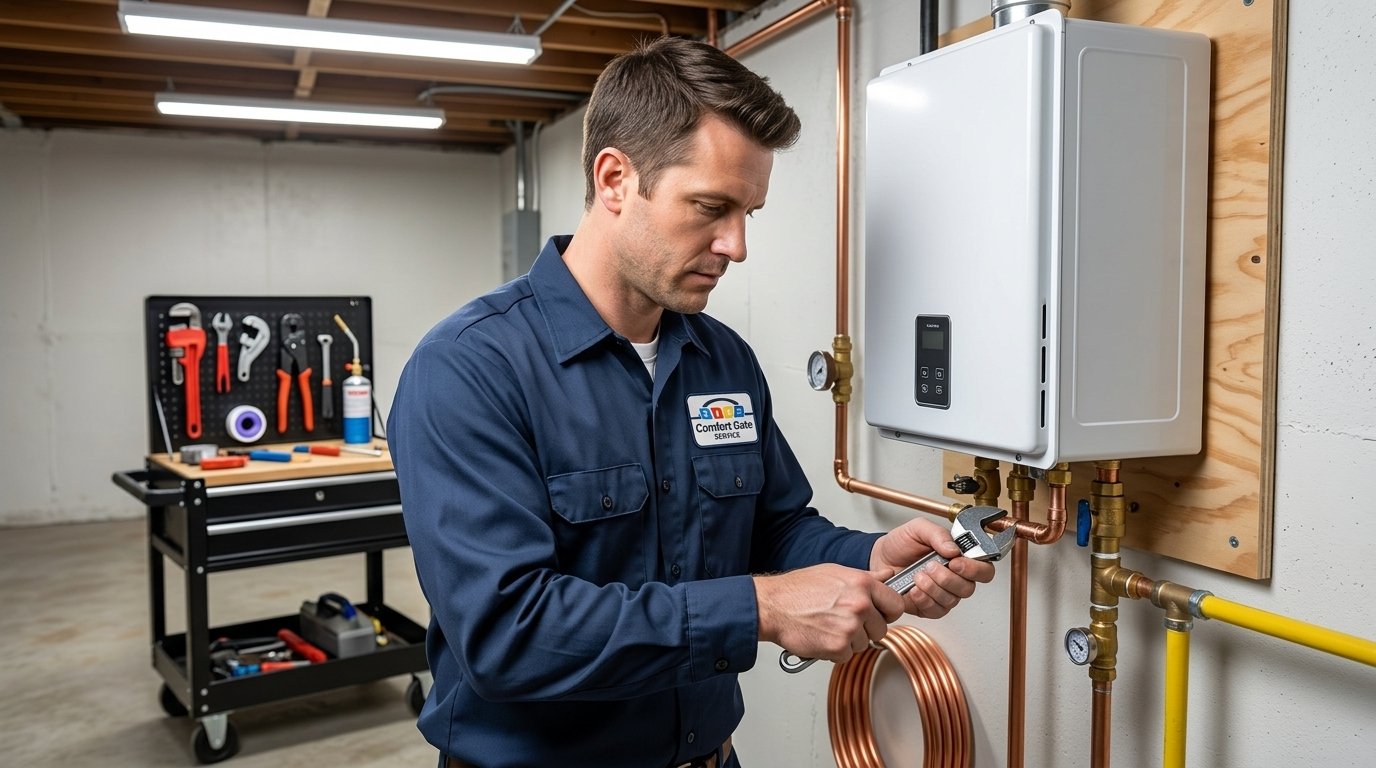
Tankless units eliminate storage tanks completely. When you turn on a hot water faucet, cold groundwater passes through a compact heat exchanger powered by a high-output gas burner. The system instantly heats water on demand, providing a continuous, endless supply of hot water without storing gallons of standby volume.
When evaluating a tankless vs tank water heater in Chicago, consider these key technical factors:
1. Cold Winter Groundwater Temperatures
During Cook County winters, incoming municipal groundwater temperatures can drop below 40°F. Tankless systems require powerful BTU gas burners to achieve a typical 70°F temperature rise on demand. Professional sizing ensures your tankless unit maintains consistent water flow during sub-zero cold snaps.
2. Energy Efficiency & Utility Savings
According to the U.S. Department of Energy, on-demand tankless systems can be 24% to 34% more energy efficient than traditional storage tank models for homes using 41 gallons or less of hot water daily.
3. Equipment Lifespan & Warranty
- Traditional Storage Tank: 8 to 12 Years
- Gas Tankless Unit: 20+ Years with regular maintenance and flushing.
4. Space Savings & Installation Flexibility
Wall-mounted tankless units free up valuable basement floor space compared to bulky 50-gallon storage tanks.
| Feature / Metric | Traditional Storage Tank | On-Demand Tankless System |
| Hot Water Supply | Limited to Tank Volume (40–50 Gal) | Continuous / Endless Supply |
| Upfront Cost | Lower Initial Investment | Higher Initial Investment |
| Average Lifespan | 8 – 12 Years | 20+ Years |
| Energy Efficiency | Standard (Standby Heat Loss) | High Efficiency (On-Demand Heating) |
| Space Required | Requires 10–15 Sq. Ft. Floor Space | Compact Wall-Mounted Unit |
| Annual Maintenance | Tank Sediment Flush | Scale Descaling / Flush |
- Choose a Traditional Tank Unit If: You prefer a lower upfront installation cost or have lower hot water demand in a smaller household.
- Choose a Tankless Unit If: You want lower monthly energy bills, an endless hot water supply for high-demand families, compact wall-mounted space savings, and a long 20-year system lifespan.
Our licensed plumbers handle professional water heater sizing, gas line retrofits, venting upgrades, and installations across Burbank, Oak Lawn, Bridgeview, and Suburban Cook County.
Explore our full lineup of Residential Plumbing & Water Heater Services.
Is a tankless water heater worth it in Chicago winters?
Yes. Properly sized gas tankless systems handle cold groundwater temperatures efficiently, delivering endless hot water while cutting standby energy costs.
How long does a tankless water heater installation take?
A standard replacement takes 4 to 6 hours. Converting from a tank to a tankless system may require gas line sizing or venting updates, typically taking a full day.