
Sub-zero winter blasts across Burbank, Oak Lawn, Bridgeview, and surrounding Cook County place immense pressure on residential plumbing systems. When water inside exposed copper or PVC supply lines freezes, it expands by nearly 9%, creating extreme pressure that often leads to ruptured pipes and extensive basement flooding.
Knowing how to protect your lines before a polar vortex hits—and how to safely thaw lines if they freeze—is critical to avoiding thousands of dollars in emergency restoration costs.
5 Proactive Steps to Prevent Frozen Pipes in Suburban Homes
Prevention is always more cost-effective than emergency repairs. Implement these steps before temperatures drop below freezing:
- Maintain Indoor Heat Above 55°F: Even if you plan to travel, never turn your thermostat below 55°F.
- Open Cabinet Doors Under Sinks: Allow ambient room heat to circulate around uninsulated plumbing fixtures located against exterior walls.
- Let Faucets Drip Slightly: Running a faint trickle of cold water through vulnerable faucets relieves static line pressure, preventing ice dams from bursting the pipe.
- Insulate Exposed Lines: Wrap foam pipe insulation around exposed lines in unheated crawlspaces, attics, and basements.
- Disconnect Exterior Hoses: Drain outdoor spigots and shut off interior frost-free hose bib isolation valves.
Safe Step-by-Step Guide: How to Thaw a Frozen Pipe
If turning on a faucet yields only a trickle during a freeze, follow this safe thawing procedure immediately:
Step 1: Keep the Faucet Open
Leave the affected faucet turned on. As you thaw the line, melting water and steam need an open outlet to escape safely.
Step 2: Locate the Freeze Zone
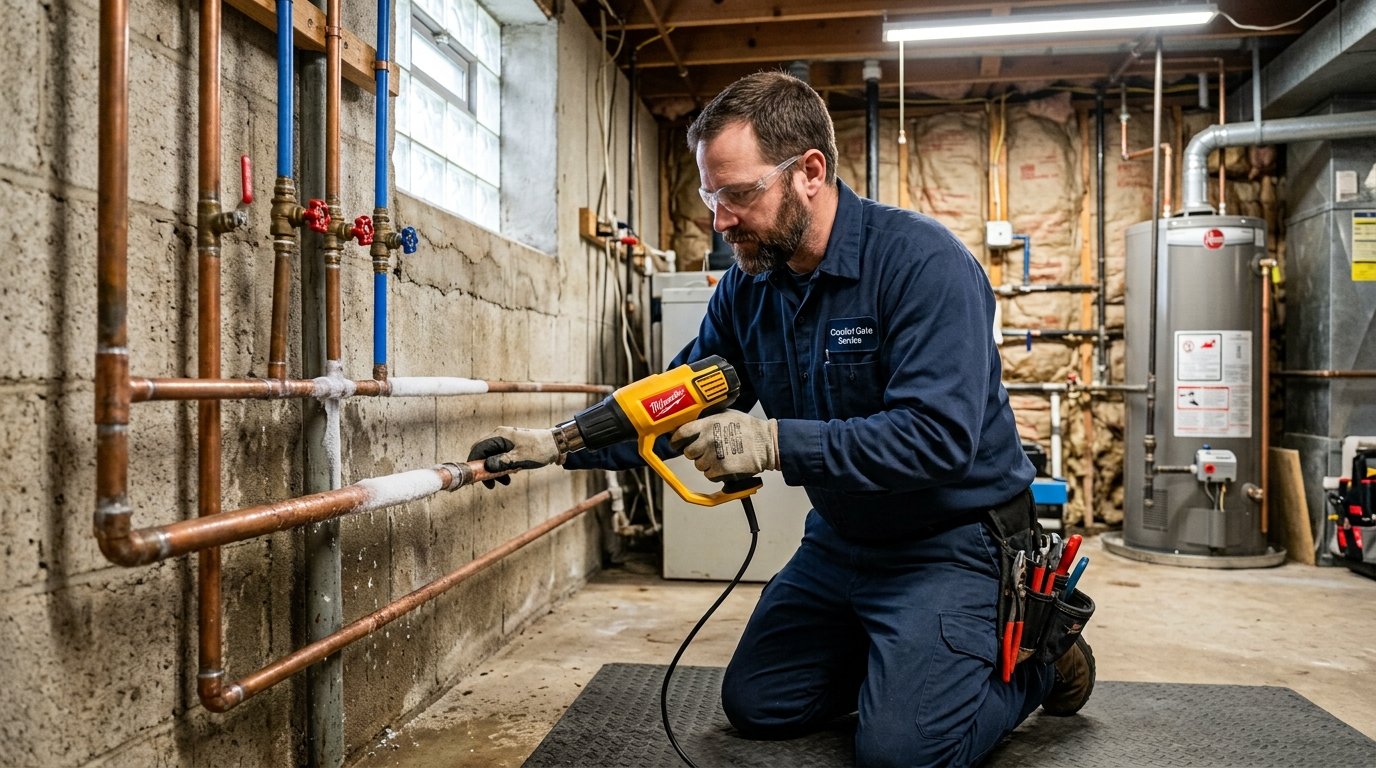
Inspect exposed piping in exterior wall cavities, crawlspaces, or basements to find frosted or bulging pipe sections.
Step 3: Apply Gentle Heat Safely
Use a handheld electric hair dryer, heat tape, or warm towels wrapped around the line starting from the faucet side moving toward the frozen zone.
⚠️ SAFETY WARNING: Never use open flames, propane torches, or blowtorches to thaw pipes. Direct flame poses a severe structural fire hazard and can boil trapped water inside the line, causing an immediate explosive burst.
What to Do If a Pipe Bursts
If an exposed pipe ruptures, act instantly to stop incoming water volume:
Shut Main Valve
Turn your main water supply shutoff valve clockwise immediately.
Turn Off Water Heater
Cut power/gas to your hot water unit to prevent dry tank burnout.
Call Emergency Plumber
Dispatch our 24/7 emergency plumbers at (708) 886-0006 for rapid pipe replacement.
If your home experiences water main shutoff issues or severe pipe failure, explore our full 24/7 Emergency Plumbing Repair Services.
Prevention vs. Emergency Response Overview
| Scenario | Preventive Action | Emergency Action |
| Sub-Zero Forecast | Trickle cold water & open cabinet doors | Inspect exposed lines in basements |
| No Water Flow / Frozen | Apply hairdryer heat starting from faucet | Keep tap open; monitor for leaks |
| Ruptured / Leaking Pipe | Shut main water supply valve | Call Comfort Gate Service immediately |
Need Emergency Pipe Thawing or Repair in Suburban Cook County?
Don’t let frozen lines compromise your home’s structure. Our team provides fast emergency thawing, copper section repairs, and winterization services throughout Burbank, Oak Lawn, Palos Heights, and Chicago.
Learn more about our full lineup of Residential Plumbing Services.