
Many classic homes across Burbank, Oak Lawn, Palos Heights, and Chicagoland rely on hydronic boiler systems connected to cast-iron radiators or radiant floor piping for winter heating. Unlike forced-air furnaces that blow heated air through metal ducts, boilers circulate heated water or steam through closed-loop pipes to deliver gentle, dust-free radiant warmth.
When a residential boiler system experiences pressure drops, air locks, or circulator pump failures during freezing Cook County winters, rapid troubleshooting keeps your home safe and warm.
4 Common Boiler & Radiant Heating Problems
Understanding how hydronic systems operate helps homeowners recognize warning signs before full system shutdowns occur:
1. Cold Radiators or Uneven Room Temperatures
If certain radiators remain cold while others get scorching hot, trapped air pockets inside the piping network are usually blocking hot water circulation. Releasing trapped air using a radiator key (“bleeding the radiator”) usually restores even heat distribution.
2. Low System Water Pressure
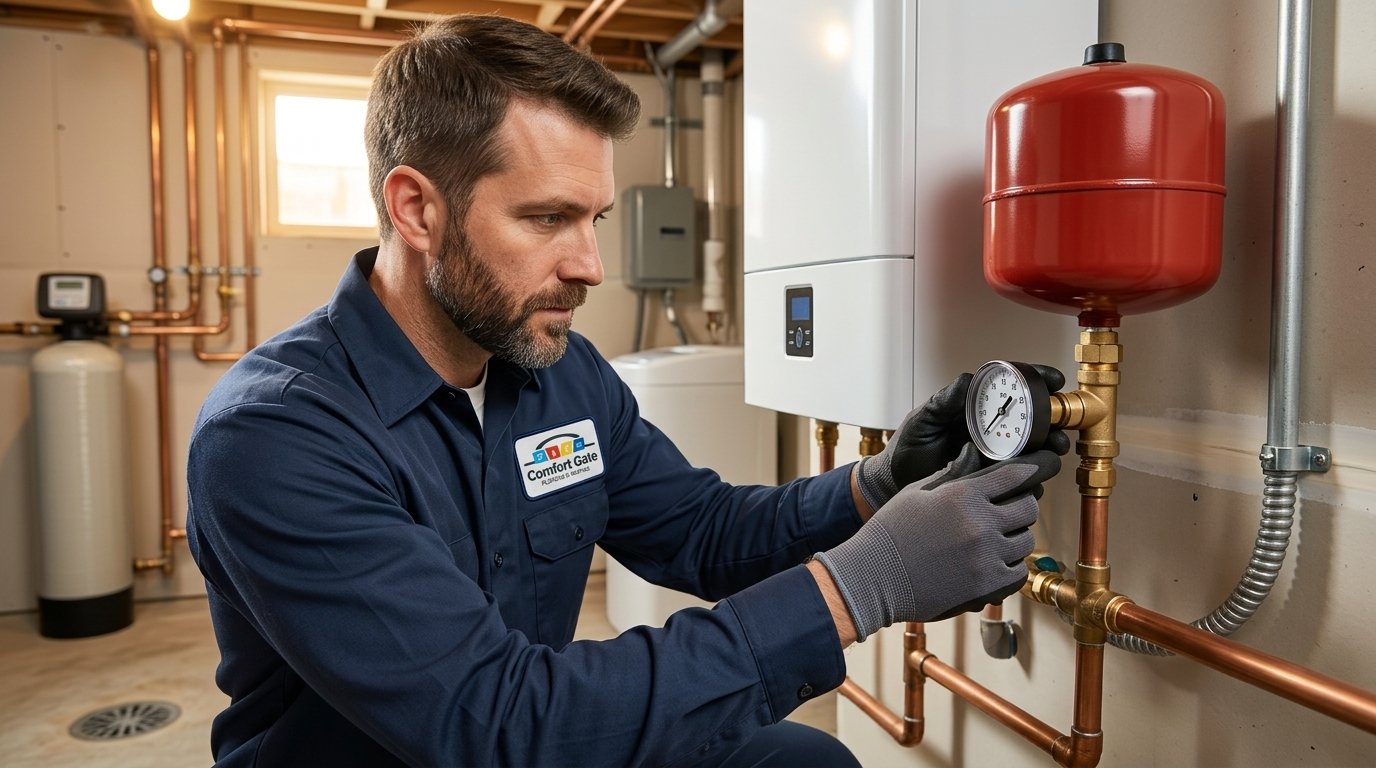
Boilers require stable water pressure (typically 12 to 15 PSI when cold) to circulate hot water up to second-floor radiators. Low pressure indicates hidden water leaks along pipe joints or a failing automatic water feeder valve.
3. Knocking, Gurgling, or “Kettling” Noises
Loud banging noises inside boiler piping—known as kettling—occur when mineral scale builds up on the heat exchanger. This restricts water flow, causing trapped water to boil prematurely and produce loud steam bubbles.
4. Water Leaking Around the Base
Leaking around boiler bases typically stems from a water-logged expansion tank, a failed pressure relief valve discharging excess PSI, or worn circulator pump flange gaskets.
Essential Annual Boiler Maintenance Tasks
Preventative maintenance keeps hydronic systems operating at maximum fuel efficiency throughout severe weather:
- Bleeding Radiators annually: Venting air out of bleeding valves at the start of each winter season.
- Inspecting the Expansion Tank: Verifying proper air cushion pressure prevents dangerous pressure spikes.
- Checking Pressure Relief Valves: Testing valve operation protects boiler vessels from structural over-pressurization.
- Flushing Mineral Sludge: Removing sediment buildup ensures optimal heat transfer across heat exchangers.
Steam Boilers vs. Hot Water Hydronic Boilers
| Feature / Metric | Hot Water (Hydronic) Boiler | Steam Boiler System |
| Operating Pressure | Low Pressure (12 – 25 PSI) | Very Low Pressure (0.5 – 2 PSI) |
| Distribution Method | Circulator Pump pushes water | Steam expands naturally through pipes |
| Radiator Valves | Bleeder valves purge trapped air | Air vents release air continuously |
| Water Level Check | Closed loop (auto-filled) | Requires weekly sight glass checks |
| Energy Efficiency | High (Modulating Condensing) | Standard Efficiency |
Explore our full range of Residential Boiler Repair & Hydronic Heating Services.
Why is my radiator hot at the bottom but cold at the top?
Air trapped inside the top of the radiator prevents hot water from filling the unit completely. Bleeding the radiator with a key releases trapped air and restores hot water flow.
How often should a residential boiler be serviced?
Boilers should be professionally inspected and serviced annually before the winter heating season to check safety valves, burners, expansion tanks, and pressure settings.