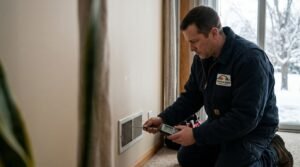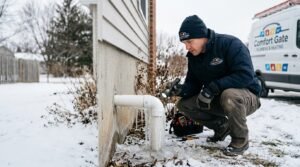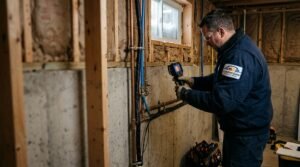


Even a top-tier, high-efficiency gas furnace will struggle to keep your home warm if heated air continuously leaks out through unsealed window gaps, exterior doors, and uninsulated attic accesses. During severe Midwestern winter cold snaps, air leaks force your heating system to run longer, spiking energy bills and accelerating component wear.
Below, the home comfort experts at Comfort Gate Service share proven, low-cost steps to eliminate drafts and seal heat loss throughout your home.
🪟 1. Window Weatherstripping
Apply self-adhesive V-seal weatherstripping or shrink-film insulation kits over drafty single-pane or older double-pane windows.
🚪 2. Door Sweeps & Thresholds
Install heavy-duty rubber door sweeps on exterior doors and adjust threshold screws to create a tight bottom seal against icy drafts.
🔌 3. Outlet & Switch Insulation
Place inexpensive foam insulation gaskets behind faceplates on exterior wall electrical outlets to block hidden cold air paths.
Key Areas Where Homes Lose the Most Heat in Winter
- Attic Hatch & Recessed Lighting: Warm air naturally rises (stack effect), escaping rapidly through uninsulated attic access doors.
- Fireplace Dampers: An open or unsealed fireplace flue acts like a chimney blowing cold air directly into your main living area.
- Basement Rim Joists: Unsealed foundation gaps around floor joists allow cold air to chill basement water lines and flooring.
📍 Winter Heat Loss Impact Guide
| Leakage Zone | Percentage of Total Heat Loss | Fast DIY Fix |
| Windows & Glass Doors | 25% – 30% | Thermal curtains & shrink insulation film |
| Attic & Ceiling Gaps | 20% – 25% | Attic hatch insulation box & caulk |
| Exterior Wall Outlets | 10% – 15% | Foam outlet wall gaskets |
❓ Frequently Asked Questions
- Can drafty windows cause my furnace to short cycle?Indirectly, yes. Drafts cause rapid room temperature drops, forcing your thermostat to signal the furnace to cycle on and off more frequently.
- How much can sealing drafts save on winter heating bills?Properly weatherstripping and sealing air leaks around doors and windows can reduce your annual heating costs by 10% to 20%.