
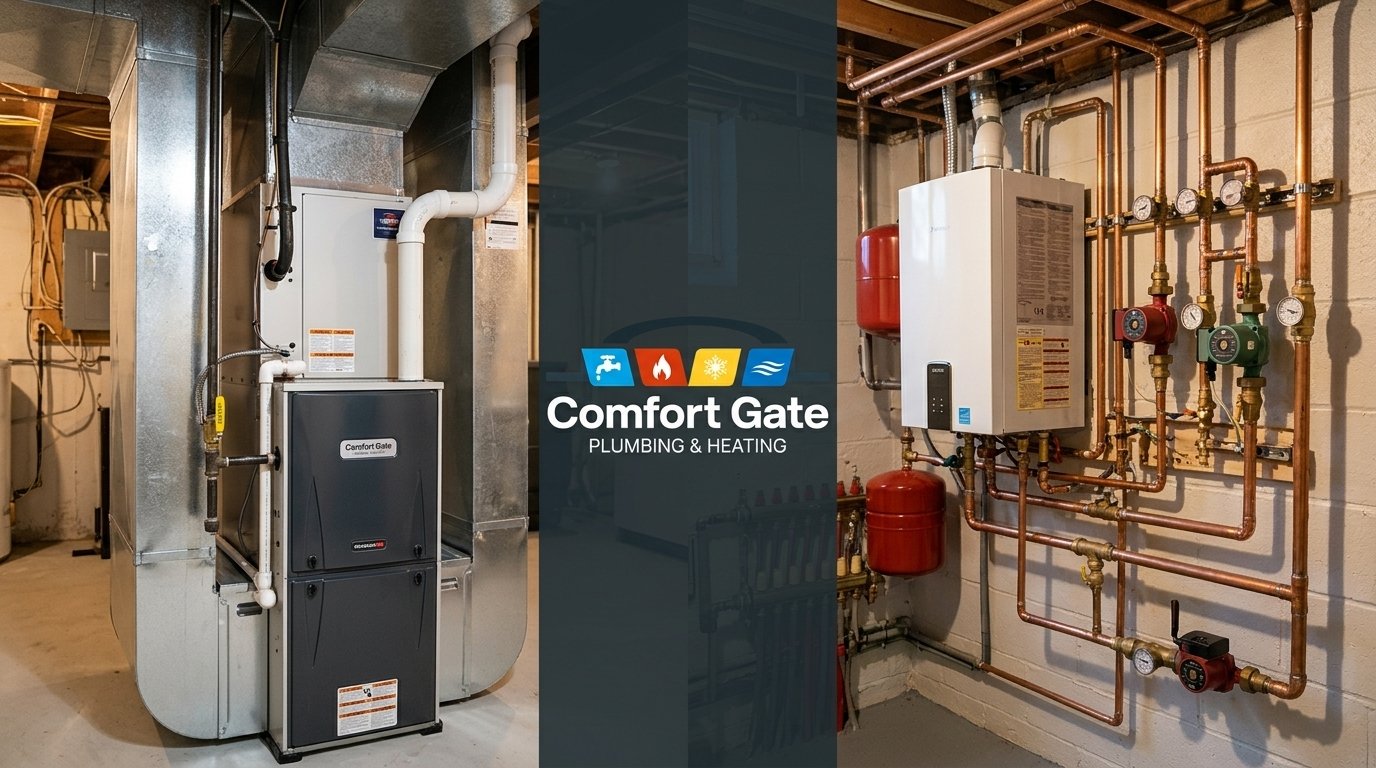
Many older suburban homes across Cook County rely on hydronic boilers with steam or hot water radiators, while newer constructions typically utilize forced-air gas furnaces. Understanding how your specific heating system functions—and recognizing early breakdown symptoms—is key to preventing winter heating emergencies.
Here is a breakdown of key operational differences, winter maintenance steps, and emergency repair indicators for both boilers and furnaces.
💨 Forced-Air Furnaces
Heats air directly over a burner box and distributes it through ductwork using a powerful blower fan motor.
🌊 Hydronic Boilers
Heats water and pumps radiant warmth or steam through baseboard units, in-floor tubing, or cast-iron radiators.
⚙️ Annual Maintenance
Furnaces require frequent filter swaps; boilers need system pressure checks, radiator bleeding, and pump testing.
Key Signs You Need Immediate Heating Service
- For Boilers: Water pooling around the base of the boiler unit, banging noises in the pipes (water hammer), cold spots in radiators, or pressure relief valve leaks.
- For Furnaces: Squealing or grinding blower sounds, yellow or flickering burner flames (instead of a steady blue flame), or burning smells that persist longer than 15 minutes.
❓ Frequently Asked Questions
- Are boilers more expensive to repair than furnaces?Boiler repairs involve both electrical and hydronic plumbing components (like zone valves, expansion tanks, and circulator pumps), which can require specialized diagnostic equipment compared to standard furnace repairs.
- How often should I bleed my home radiators?You should bleed your steam or hot water radiators once at the start of every heating season—or whenever you notice cold air pockets preventing the top of the radiator from heating up.