
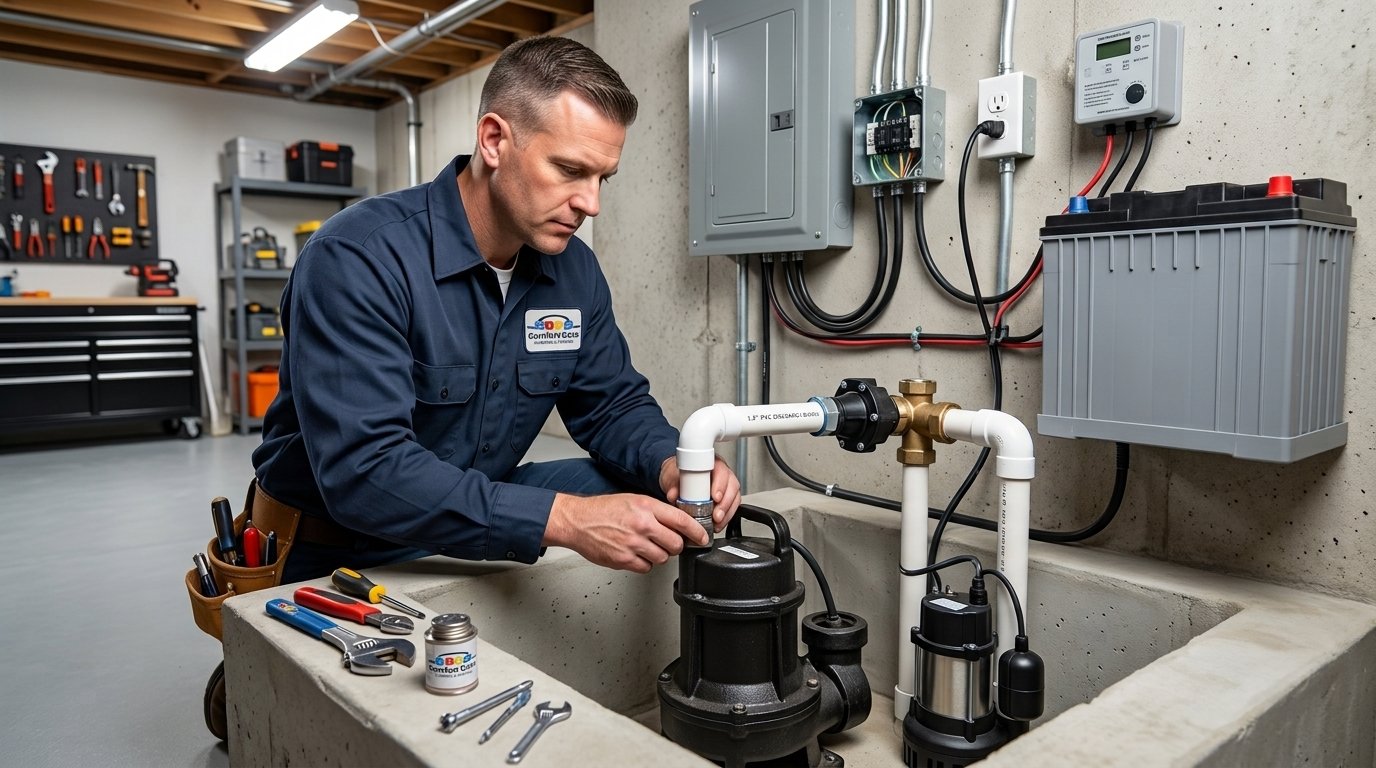
Heavy spring rainfall and rapid winter snowmelts across Burbank, Oak Lawn, Palos Heights, and the surrounding Chicagoland area put immense hydrostatic pressure on residential foundations. Without a reliable primary sump pump and secondary battery backup system, rising groundwater can quickly submerge basement floors, damaging mechanical equipment, drywall, and personal belongings.
Understanding how your sump pump basin works—and why a battery backup protection system is essential during severe weather storms—helps keep your property dry year-round.
Why Primary Sump Pumps Fail During Heavy Storms
A primary sump pump sits inside a pit (basin) at the lowest point of your basement floor, automatically pumping accumulated groundwater away from your foundation through a PVC discharge pipe.
However, primary pumps can fail unexpectedly when you need them most:
- Electrical Power Outages: Severe thunderstorms, high winds, and blizzards frequently knock out local power grids right as groundwater levels peak.
- Stuck or Obstruction-Tangled Floats: Mechanical float switches can get pinned against pit walls or jammed by small debris, preventing the pump from turning on.
- Overwhelmed Pumping Capacity: High-volume rainstorms can fill basin pits faster than a low-horsepower or aging pump can evacuate water.
- Pump Motor Burnout: The average lifespan of a primary sump pump is 7 to 10 years; aging pump motors can freeze or trip circuit breakers during continuous use.
The Critical Role of a Battery Backup Sump Pump System
A battery backup sump pump installs directly alongside your primary unit in the same basin, powered by a dedicated marine-grade battery charger system:
- Automatic Activation: If power goes out or the primary pump fails, a secondary float switch immediately engages the battery pump.
- High Pumping Volume: Modern dual-battery backup systems can pump up to 3,000+ gallons per hour for several days on a single charge.
- Audible & Smart Alerts: Emits warning alerts to notify homeowners when main power drops or when the backup system triggers.
Pedestal vs. Submersible Sump Pumps
| Feature / Metric | Submersible Sump Pump | Pedestal Sump Pump |
| Motor Location | Sealed inside water pit | Mounted above basin on a column |
| Noise Level | Quiet operation (muffled by water) | Louder motor noise |
| Cooling Method | Cooled naturally by surrounding water | Air-cooled motor |
| Lifespan | 7 – 10 Years | 10 – 15 Years |
| Debris Handling | High (solids-handling impellers) | Moderate (vulnerable to pit clogging) |
Essential Sump Pump Maintenance Checklist
Performing quarterly checks prevents catastrophic basement flooding:
- Test the Float Switch: Pour a 5-gallon bucket of water directly into the pit to verify the pump kicks on and empties the basin rapidly.
- Inspect the Check Valve: Ensure the one-way check valve on the PVC discharge pipe prevents pumped water from flowing back into the pit.
- Clean the Inlet Screen: Remove leaves, sediment, and gravel from the base of the pump.
- Check Battery Water Levels: For wet-cell backup batteries, check distilled water levels every six months to maintain charge capacity.
Explore our full range of Basement Waterproofing & Sump Pump Repair Services.
How long do battery backup sump pumps run during a power outage?
A fully charged deep-cycle battery backup system provides continuous pumping protection for 24 to 48 hours, or up to several days on intermittent pumping cycles.
How often should a primary sump pump be replaced?
Most cast-iron submersible sump pumps last between 7 and 10 years. We recommend proactive replacement after 7 years to prevent unexpected motor failure during severe weather.